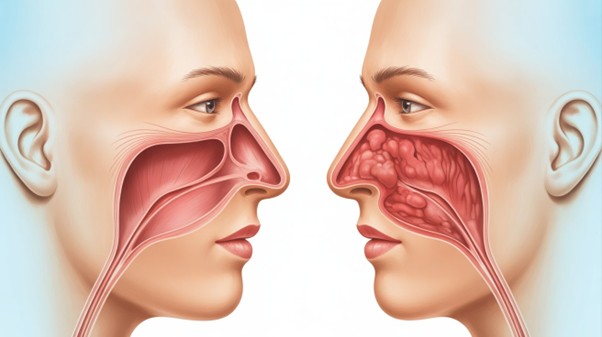
Every time the season shifts, millions of people in India brace for the familiar assault of a blocked nose, heaviness in the face, and relentless sneezing. Some manage through it with steam and rest. Others find that the problem never really clears and simply changes shape from month to month. Understanding whether you are dealing with seasonal sinusitis or chronic rhinitis is not just academic. It changes the entire direction of treatment. If you have been circling between temporary relief and recurring symptoms, reaching out to the best online homeopathy clinic in Secunderabad, Hyderabad may be the most useful step you take this year.
Both conditions affect the nasal passages and share several overlapping symptoms. But their causes, timelines, and the way they respond to treatment are quite different. Confusing one for the other often leads to repeated courses of antihistamines or decongestants that provide short windows of relief without addressing what is actually driving the problem.
This article breaks down the key differences between the two conditions, explains how homeopathy approaches each one distinctly, and outlines the remedies most commonly used in clinical practice.
What Is Seasonal Sinusitis and How Does It Develop?

Seasonal sinusitis is the inflammation of one or more of the four sinus cavities in the skull, triggered by seasonal allergens or infections. It typically flares during specific periods such as the monsoon, post-monsoon months, or early spring when airborne pollen, mould spores, and fungal particles are at their peak.
In a healthy nasal system, the sinuses drain freely through small openings into the nasal passages. When allergens or a viral infection causes the nasal lining to swell, these openings become blocked. Mucus builds up inside the sinus cavity, creating the pressure, pain, and congestion that characterise sinusitis.
Typical signs of seasonal sinusitis include:
• Facial pressure or pain, particularly around the forehead, cheeks, and behind the eyes
• Thick yellowish or greenish discharge from the nose or down the back of the throat
• Headache that worsens when bending forward
• Reduced or absent sense of smell during the episode
• Symptoms that improve once the season passes or after treatment
Acute sinusitis typically resolves within 4 weeks. When episodes keep returning with each seasonal change, the condition is classified as recurrent acute sinusitis, which is a different challenge altogether and often points to an underlying sensitivity that needs to be addressed constitutionally.
What Is Chronic Rhinitis and Why Is It Often Misunderstood?
Rhinitis refers to the inflammation of the mucous membrane lining the inside of the nose. In its chronic form, it persists for more than 12 weeks and does not follow a clear seasonal pattern. Many patients with chronic rhinitis experience symptoms year-round with fluctuating intensity rather than defined episodic flares.
Chronic rhinitis can be allergic, meaning it is triggered by specific allergens like house dust mites, pet dander, or mould, or non-allergic, where there is no clear immune trigger but the nasal lining remains persistently irritable and reactive to temperature changes, pollution, strong odours, or emotional stress.
Symptoms that suggest chronic rhinitis rather than sinusitis include:
• Constant or near-constant nasal congestion regardless of the time of year
• Clear, watery discharge that tends to be worse in the morning or on waking
• Persistent sneezing in bouts, often triggered by cold air or dust
• Postnasal drip causing throat irritation or a persistent urge to clear the throat
• Itching inside the nose, eyes, or palate in allergic cases
In India, allergic rhinitis affects an estimated 20 to 30% of the population, and a significant portion of these cases are never properly diagnosed or treated at root level. Chronic rhinitis that goes unmanaged over years can lead to nasal polyps, sleep disruption, reduced quality of life, and in some cases, secondary sinusitis.
Key Differences Between Seasonal Sinusitis and Chronic Rhinitis
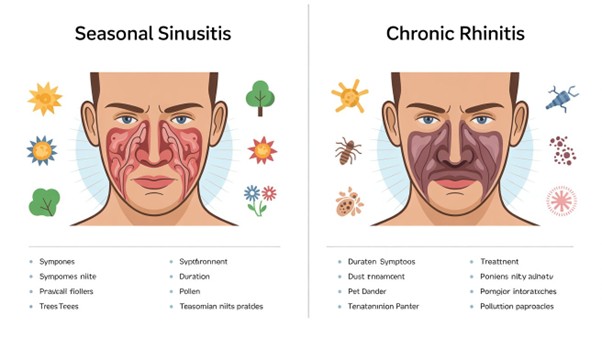
Though these conditions overlap in their nasal symptoms, several features help distinguish one from the other.
• Location of inflammation: Sinusitis involves the sinus cavities themselves, while rhinitis is confined to the nasal lining.
• Nature of discharge: Sinusitis typically produces thicker, coloured mucus. Rhinitis tends to produce thin, watery discharge.
• Facial pain: Pronounced facial pressure and tenderness over the sinus areas is more characteristic of sinusitis.
• Timeline: Sinusitis has clearer episodic patterns. Chronic rhinitis is persistent and continuous.
• Triggers: Sinusitis is often triggered by infection or acute allergen exposure. Rhinitis can be triggered by a much broader range of stimuli, including irritants and temperature.
Both conditions can coexist, a situation known as rhinosinusitis, where inflamed nasal passages lead to blocked sinus drainage, and both problems feed each other. Getting an accurate picture of which condition is primary matters for selecting the right homeopathic remedy.
How Homeopathy Approaches These Two Conditions Differently
Homeopathy does not treat a diagnosis in isolation. It treats the patient as a whole, taking into account the physical symptoms, the modalities that worsen or improve them, the emotional state, and the general constitutional tendencies of the individual. This is why two patients with identical sinusitis symptoms may receive different remedies.
For seasonal sinusitis with acute episodes, remedies are selected based on the precise character of the symptoms during the attack: the side affected, the type of discharge, the time of day when symptoms peak, and whether warmth or cold air brings relief. For chronic rhinitis, the approach is more constitutional, aiming to reduce the underlying sensitivity of the mucous membrane over time.
The top homeopathy doctors in Hyderabad who approach these cases holistically often see significant improvement not just in nasal symptoms but in the patient’s overall energy, sleep quality, and immune resilience after a few months of consistent constitutional treatment.
Homeopathic Remedies Commonly Used for Seasonal Sinusitis

Kali Bichromicum: For Thick, Stringy Discharge and Sinus Pressure
Kali Bich is one of the most clinically important remedies for sinusitis where the discharge is thick, tenacious, and stringy, often forming long ropy strands. The blockage tends to alternate between sides, and the patient often experiences significant post-nasal drip. Pain in the sinus areas is sharp, well-defined, and often migrates from one spot to another.
Hepar Sulphuris: For Infected, Sensitive Sinuses with Purulent Discharge
Hepar Sulph suits sinusitis where there is a secondary bacterial element, with thick, yellowish, or offensive discharge and marked hypersensitivity to cold air. Even a slight draught worsens the symptoms dramatically. These patients are often irritable and chilly, and the facial pain responds badly to touch or pressure.
Silicea: For Recurring Sinusitis with Chronic Tendency
Silicea is indicated in patients who experience repeated sinusitis episodes that never fully resolve, leaving a residual feeling of obstruction and dullness. These individuals tend to be chilly, lacking in vitality, and prone to recurring infections. Silicea works at a deeper level to improve the body’s ability to resolve lingering inflammation and prevent recurrence.
Homeopathic Remedies Commonly Used for Chronic Rhinitis

Allium Cepa: For Profuse, Watery Discharge with Eye Involvement
Allium Cepa is derived from red onion and is one of the best acute remedies for allergic rhinitis with profuse, acrid nasal discharge that burns the upper lip, accompanied by profuse bland watering of the eyes. Symptoms typically worsen indoors and improve in open air. It is particularly useful during spring and autumn when pollen counts are high.
Natrum Muriaticum: For Chronic Allergic Rhinitis with Egg-White Discharge
Natrum Mur is a deep-acting constitutional remedy for patients with chronic nasal allergies where the discharge resembles egg white and sneezing occurs in violent bouts, often on waking. These individuals tend to be reserved, sensitive to heat, and averse to consolation. Natrum Mur addresses both the nasal sensitivity and the underlying constitutional pattern.
Arsenicum Album: For Burning Discharge, Restlessness, and Anxiety
Arsenicum Album is indicated in rhinitis where the nasal discharge is thin, watery, and burning but the nose itself feels blocked. Sneezing provides no relief. The patient is often restless, anxious, and very sensitive to cold, with symptoms that tend to worsen after midnight. This remedy works particularly well for non-allergic rhinitis with strong nervous system involvement.
Why Constitutional Treatment Matters More Than Acute Relief
One of the most important distinctions in homeopathic practice is between acute prescribing and constitutional prescribing. Acute remedies address the immediate episode. Constitutional remedies address the susceptibility that keeps producing episodes.
A patient who has had sinusitis every monsoon for the past five years is not just dealing with a seasonal infection. They have an underlying immune or constitutional vulnerability that needs to be treated if the pattern is to change. Similarly, a patient with chronic rhinitis who has been relying on antihistamines for years is managing the surface without touching the root.
Constitutional homeopathic treatment takes into account the full picture: the physical symptoms across all systems, the mental and emotional state, past illnesses, and family history. When the right constitutional remedy is identified and given at the correct potency, the changes that follow are systematic and lasting.
Patients treated constitutionally for chronic rhinitis or recurrent sinusitis typically notice, over 3 to 6 months, a gradual reduction in the frequency of episodes, a shorter duration when episodes do occur, and an overall improvement in energy levels, immunity, and wellbeing.
When to Seek Expert Homeopathic Guidance
Self-prescribing a few acute remedies can offer short-term comfort. But when sinusitis keeps returning every season or rhinitis has become a background feature of daily life, expert guidance is essential. The depth of case-taking required to identify the right constitutional remedy is not something that can be replicated through a symptom-matching app or a general health website.
The best homeopathy treatment in USA who specialise in chronic respiratory conditions bring years of clinical experience to nasal cases. They are trained to distinguish between the many remedies that address the nose and to identify the one that fits the patient as a whole person, not just the presenting symptom.
Online consultations make this level of expert care accessible to anyone in or around Hyderabad, including those in Secunderabad and surrounding areas, without the need to travel or wait for lengthy appointments. A thorough intake, clear follow-up, and consistent monitoring are all possible through a well-designed online consultation system.
Conclusion
Seasonal sinusitis and chronic rhinitis are two distinct conditions that often get treated as if they are the same problem. The difference matters enormously when it comes to choosing the right homeopathic remedy and the right level of treatment depth. Acute remedies can ease an episode. Constitutional treatment can change the pattern.
If recurring sinus infections arrive reliably with every season change, or if your nose has simply never been clear for as long as you can remember, it is time to move beyond temporary fixes. The best online homeopathy clinic in Secunderabad, Hyderabad offers personalised, root-level care that addresses the full individual picture rather than just the nasal symptoms in isolation.
Art of Homeo brings together experienced practitioners who are skilled in constitutional assessment and chronic case management for respiratory conditions including sinusitis and rhinitis. Whether you prefer an in-clinic visit or an online consultation from the comfort of home, the team at Art of Homeo is equipped to evaluate your case thoroughly and support your recovery with individualised homeopathic care. Visit www.artofhomeo.com to book your consultation today.
Frequently Asked Questions
1. What is the main difference between sinusitis and rhinitis?
Sinusitis is the inflammation of the sinus cavities and typically causes facial pressure, thick coloured discharge, and headache, while rhinitis is the inflammation of the nasal lining and usually presents with watery discharge, sneezing, and nasal congestion without sinus pain.
2. Can homeopathy permanently treat chronic rhinitis?
Yes, constitutional homeopathic treatment can significantly reduce and in many cases eliminate chronic rhinitis by addressing the underlying nasal sensitivity and immune pattern rather than just suppressing symptoms with repeated doses of antihistamines.
3. How long does homeopathic treatment take for seasonal sinusitis?
Acute sinusitis episodes often respond to homeopathic remedies within days, while constitutional treatment to reduce the frequency of seasonal recurrence typically requires 3 to 6 months of consistent care under a qualified homeopathic practitioner.
4. Are there any side effects to homeopathic remedies for sinus conditions?
Homeopathic remedies are safe, non-toxic, and carry no chemical side effects, making them suitable for patients of all ages including children and the elderly, as well as those taking other medications for unrelated conditions.
5. How do I know if I need acute or constitutional homeopathic treatment for my nasal condition?
If your symptoms occur occasionally during a specific season and clear completely between episodes, acute treatment may be sufficient; but if symptoms are persistent, recurring, or present for more than 3 months, consulting the best online homeopathy clinic in Secunderabad, Hyderabad for a full constitutional assessment is the most effective path forward.